Most books and articles on home education are quick to point out that homeschooling is legal--in one form or another-- in all fifty states. Parents might have to jump through more hoops in one state than in another, but, as long as they're willing to jump through those hoops, they are allowed to teach their own children at home. But are these hoops actually necessary?
As their ranks increase, homeschoolers are tapping public schools for curriculum, part-time classes, extracurricular services, and online learning.
For some years, the Social Security Administration has permitted home schoolers to receive benefits in some cases. The agency used a fuzzy test involving several different factors. New documents from the Social Security Administration indicate that the agency has a much better defined policy in place now.
In Pierce v. Society of the Sisters, the U.S. Supreme Court ruled that "the fundamental theory of liberty upon which all governments of this Union repose excludes any general power of the state to standardize its children by forcing them to accept instruction from public teachers only. The child is not the creature of the state."
L.D. 160, An Act to Amend the Laws Governing Home Instruction, was approved by the 121st Maine Legislature and signed by Governor Baldacci on May 16, 2003. This information sheet details the changes and how to comply with the law.
A look at the battle for the homeschooling movement and the demographics of homeschooling families that challenges the notion that all homeschoolers are conservative fundamentalists. This article is a critical look at the HSLDA.
The Home School Legal Defense Association is a non-profit advocacy organization established to defend and advance the constitutional right of parents to direct the education of their children and to protect family freedoms. HSLDA offers annual memberships and fully represents member families when they are in need of legal assistance. HSLDA also participates in legislative advocacy and research.
The Rutherford Institute is an international legal and educational organization dedicated to preserving human rights and defending civil liberties. Deeply committed to protecting the constitutional freedoms of every American and the integral human rights of all people, The Rutherford Institute has emerged as a prominent leader in the national dialogue on civil liberties and equal rights. Parents have a constitutional right to direct and control the upbringing of their children, and laws or governmental actions that unreasonably infringe the rights of parents to raise and educate their children according to their own values are constitutionally suspect. The Rutherford Institute responds to over one thousand requests for assistance annually from parents whose rights were placed in jeopardy.
Appeals that question the local school unit's policy compliance with this subchapter must be made to the commissioner, whose decision is final and binding.
Every important movement or trend in this country was followed by an onslaught of legislative actions which resulted in some legal stipulations that controlled the trend. What is really of concern is that this legislative control is not static, but very fluid, subject to change (meaning more restrictions in many cases). These changes occur through either more legislative actions on the part of the government or through interpretation in the judicial system. Currently, the homeschool movement is being closely monitored by various teacher unions, the public and legislative bodies throughout the United States, resulting in more and more laws being passed to control or monitor the movement. If the homeschool movement is to survive in a manner which we feel would be beneficial to us and society as a whole, we have to be more and more diligent in protecting our rights. The only way we can do this is to be more active in the political process. The question now becomes, how do we do this?
Vermont law specifically refers to homeschooling in 16 V.S.A. § 11(a)(21) and 16 V.S.A. § 166b. To homeschool under this statute, you’ll need to follow these guidelines. Necessary steps include sending in a written enrollment notice, submitting a narrative describing the content to be provided in each subject area, obtaining acknowledgement of compliance, teaching the required subjects and assessing your child annually.
A school administrative unit shall conform to the following standards in making public school resources and services available to a student enrolled in a home instruction program under section 5001-A, subsection 3, paragraph A, subparagraph (4) for a student otherwise eligible to attend school in that school administrative unit. [2003, c. 181, §2 (amd).] 1. Participation in regular classes. A student receiving home instruction may enroll in specific day school classes at the appropriate public school if each of the following conditions is met. A. The student or the student's parent or guardian, on the student's behalf, applies in writing to and receives written approval from the superintendent or the superintendent's designee. Approval may not be unreasonably withheld. [1995, c. 610, §1 (new).] B. The student can demonstrate prior satisfactory academic achievement consistent with school unit policy and procedures applicable to all students. [1995, c. 610, §1 (new).] C. The student shall comply with behavioral, disciplinary, attendance and other classroom rules applicable to all students. If a student fails to comply, the school may withhold credit or terminate participation. [1995, c. 610, §1 (new).] D. Transportation must be provided by the parent or guardian or student. The student may use the same transportation as all other students in the school unit, as long as additional expenses are not incurred. [1995, c. 610, §1 (new).] E. The student shall complete all assignments and tests as required of all students in the class. [1995, c. 610, §1 (new).] F. A home-schooled student may audit a course in accordance with established local policy at the appropriate public school under the following conditions. (1) The student or the student's parent or guardian, on behalf of the student, applies in writing to and receives written approval from the superintendent or the superintendent's designee to audit a specific course or courses. Participation may not be unreasonably withheld. (2) The student agrees to meet established behavioral, disciplinary, attendance and other classroom rules applicable to all students. If a student fails to comply, the school may terminate participation. [1995, c. 610, §1 (new).] [1995, c. 610, §1 (new).] 2. Academic credit. A student receiving home-school instruction must receive academic credit subject to the following requirements. A. Academic credit for individual courses must be awarded if the student meets required academic standards applicable to all students enrolled in the same course. [1995, c. 610, §1 (new).] B. Academic credit must be awarded for successful completion of alternative instruction opportunities sponsored by the school and available to all students. [1995, c. 610, §1 (new).] [1995, c. 610, §1 (new).] 3. Special education services. A student receiving home-school instruction is eligible for special education services, as provided under federal regulations, in accordance with section 5001-A and relevant department procedures and standards. [1995, c. 610, §1 (new).] 4. Participation in cocurricular activities. A student receiving home-school instruction is eligible to participate in cocurricular activities sponsored by the local school unit provided the following requirements are met. A. The student or the student's parent or guardian, on behalf of the student, applies in writing to and receives written approval from the principal of the school or the principal's designee. Participation may not be unreasonably withheld. [1995, c. 610, §1 (new).] B. The student agrees to meet established behavioral, disciplinary, attendance and other rules applicable to all students. [1995, c. 610, §1 (new).] [1995, c. 610, §1 (new).] 5. Participation in extracurricular activities. Students receiving home-school instruction are eligible to try out for extracurricular activities sponsored by the local school unit, provided the student applies in writing, if the following requirements are satisfied. A. The student agrees to abide by equivalent rules of participation as are applicable to regularly enrolled students participating in the activity and provides evidence that the rules of participation are being met. [1995, c. 610, §1 (new).] B. The student complies with the same physical examination, immunization, insurance, age and semester eligibility requirements as regularly enrolled students participating in the activity. All required documentation must be made available upon request by the school unit. [1995, c. 610, §1 (new).] C. The student meets equivalent academic standards as those established for regularly enrolled students participating in the activity and provides evidence that the academic standards are being met. [1995, c. 610, §1 (new).] D. The student abides by the same transportation policy as regularly enrolled students participating in the activity. [1995, c. 610, §1 (new).] [1995, c. 610, §1 (new).] 6. Use of school facilities and equipment. A student receiving home-school instruction may use public school facilities and equipment on the same basis as regularly enrolled students if the following conditions are met: A. Use does not disrupt regular school activities; [1995, c. 610, §1 (new).] B. Use is approved by the school principal in accordance with established school policy; [1995, c. 610, §1 (new).] C. Use does not create additional expense to the school unit; [1995, c. 610, §1 (new).] D. Use is directly related to the student's academic program; and [1995, c. 610, §1 (new).] E. Use of potentially hazardous areas, such as shops, laboratories and the gymnasium, is supervised by a qualified employee of the school administrative unit. [1995, c. 610, §1 (new).] [1995, c. 610, §1 (new).] 7. Use of school textbooks and library books. Subject to availability, a student receiving home instruction may use school textbooks if the number of particular copies are sufficient and library books owned by the school unit subject to the following conditions: A. Use does not disrupt regular student, staff or special program functions; [1995, c. 610, §1 (new).] B. The student's sign-out period for a library book is the same as that applicable to regularly enrolled students; [1995, c. 610, §1 (new).] C. The student may sign out a textbook for a period not to exceed one year; and [1995, c. 610, §1 (new).] D. The parent or guardian and student agree to reimburse the school unit for lost, unreturned or damaged library books and textbooks and for consumable supplies used. [1995, c. 610, §1 (new).] [1995, c. 610, §1 (new).] 8. Reimbursement for students enrolled in equivalent instruction programs. A school administrative unit is entitled to receive state subsidy for any student who receives instruction through one or more on-site academic courses from a public school but is not a full-time student. A school administrative unit that sends any tuition student to another school administrative unit or to a private school approved pursuant to chapter 219 is also entitled to receive state subsidy under this subsection. The rate of reimbursement must be established in increments of 0.25 full-time equivalent status up to 1.0 full-time equivalent status based on the average amount of time per day that a student receives on-site academic services from a public school. School administrative units shall keep an accurate count of the number of students receiving on-site academic services and shall include the full-time equivalency status of these students in the annual count of students attending school in accordance with section 6004.
Do the public school authorities feel threatened by homeschooling? Judging by their efforts to lure homeschooling families into dependence on local school districts, the answer is apparently yes. For the last several years, homeschooling has been the fastest growing educational alternative in the country. The sheer number of homeschoolers represent a distinct threat to the hegemony of the government school monopoly. Qualitatively, the academic success of homeschoolers, measured by standardized test scores and recruitment by colleges, debunk the myth that parents need to hire credentialed experts to force children to learn.
This list is created to be a means of informing, documenting and evaluating available information concerning the impact of virtual/charter schools on the homeschooling community. This information consists of and is not limited to news items, articles from various sources, legislative information (bills, law changes), documented efforts and experiences and other information that may give weight to whether home-based charter schools or virtual schools are having an impact in any negative way on homeschooling.
When the local public school unit does not provide academic instruction for specific grade levels, the following applies for students enrolled in an approved program of equivalent instruction. [1995, c. 610, §1 (new).] 1. Class participation. The home-schooled student or the student's parent or guardian shall request authorization from the resident local school unit to apply to another school unit for permission to participate in classes or activities in that other school unit. [1995, c. 610, §1 (new).] 2. Tuition payment. Tuition payments for home-schooled student participation in a local school unit, including attendance at a career and technical education center or a career and technical education region, other than the applicant's resident district is the responsibility of the home-schooled student, the student's parent or guardian or the student's resident school administrative unit, in accordance with local school unit policy. Participation may not be unreasonably withheld. [1995, c. 610, §1 (new); 2003, c. 545, §5 (rev).] 3. Participation eligibility. A tuitioned home-schooled student is subject to the rules relating to eligibility for participation in cocurricular or extracurricular activities as may apply at the receiving school unit. [1995, c. 610, §1 (new).] 4. Interscholastic activities. A tuitioned home-schooled student attending classes in more than one receiving school unit is not eligible for participation in interscholastic activities at any local school unit.
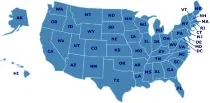
Find the laws pertaining to home education for all 50 states and U.S. territories.
This is a list of states that have addressed issues of homeschooler participation in public school classes, sports, activities, etc.
1. Requirement. Persons 7 years of age or older and under 17 years shall attend a public day school during the time it is in regular session ...
3. Alternatives to attendance at public day school. Alternatives to attendance at public day school are as follows. A. Equivalent instruction alternatives are as follows. (1) A person is excused from attending a public day school if the person obtains equivalent instruction in: (a) A private school approved for attendance purposes pursuant to section 2901; (b) A private school recognized by the department as providing equivalent instruction; (c-1) A home instruction program that complies with the requirements of subparagraph (4); or (d) Any other manner arranged for by the school board and approved by the commissioner. (2) A student is credited with attendance at a private school only if a certificate showing the name, residence and attendance of the person at the school, signed by the person or persons in charge of the school, has been filed with the school officials of the administrative unit in which the student resides. (4) The following provisions govern a home instruction program. (a) The student's parent or guardian shall provide a written notice of intent to provide home instruction simultaneously to the school officials of the administrative unit in which the student resides and to the commissioner within 10 calendar days of the beginning of home instruction. The notice must contain the following information: (i) The name, signature and address of the student's parent or guardian; (ii) The name and age of the student; (iii) The date the home instruction program will begin; (iv) A statement of assurance that indicates the home instruction program will provide at least 175 days annually of instruction and will provide instruction in the following subject areas: English and language arts, math, science, social studies, physical education, health education, library skills, fine arts and, in at least one grade from grade 6 to 12, Maine studies. At one grade level from grade 7 to 12, the student will demonstrate proficiency in the use of computers; and (v) A statement of assurance that indicates that the home instruction program will include an annual assessment of the student's academic progress that includes at least one of the forms of assessment described in division (b). (b) On or before September 1st of each subsequent year of home instruction, the student's parent or guardian shall file a letter with the school officials of the administrative unit in which the student resides and the commissioner stating the intention to continue providing home instruction and enclose a copy of one of the following forms of annual assessment of the student's academic progress: (i) A standardized achievement test administered through the administrative unit in which the student resides or through other arrangements approved by the commissioner. If the test is administered through the administrative unit in which the student resides, that administration must be agreed to by the school officials of the administrative unit prior to submission of the written notice of intent to provide home instruction; (ii) A test developed by the school officials of the administrative unit in which the student resides appropriate to the student's home instruction program, which must be agreed to by the school officials of the administrative unit prior to submission of the written notice of intent to provide home instruction; (iii) A review and acceptance of the student's progress by an identified individual who holds a current Maine teacher's certificate; (iv) A review and acceptance of the student's progress based on, but not limited to, a presentation of an educational portfolio of the student to a local area homeschooling support group whose membership for this purpose includes a currently certified Maine teacher or administrator; or (v) A review and acceptance of the student's progress by a local advisory board selected by the superintendent of the administrative unit in which the student resides that includes one administrative unit employee and 2 home instruction tutors. For the purpose of this subdivision, a "home instruction tutor" means the parent, guardian or other person who acts or will act as a primary teacher of the student in the home instruction program. This provision must be agreed to by the school officials of the administrative unit in which the student resides prior to submission of the written notice of intent to provide home instruction. (c) Dissemination of any information filed under this subparagraph is governed by the provisions of section 6001; the federal Family Educational Rights and Privacy Act of 1974, 20 United States Code, Section 1232g (2002); and the federal Education for All Handicapped Children Act of 1975, 20 United States Code, Sections 1401 to 1487 (2002), except that "directory information," as defined by the federal Family Educational Rights and Privacy Act of 1974, is confidential and is not subject to public disclosure unless the parent or guardian specifically permits disclosure in writing or a judge orders otherwise. Copies of the information filed under this subparagraph must be maintained by the student's parent or guardian until the home instruction program concludes. The records must be made available to the commissioner upon request. (d) If the home instruction program is discontinued, students of compulsory school age must be enrolled in a public school or an equivalent instruction alternative as provided for in this paragraph. The receiving school shall determine the placement of the student. At the secondary level, the principal of the receiving school shall determine the value of the prior educational experience toward meeting the standards of the system of learning results as established in section 6209. (e) The commissioner shall amend or adopt rules to accomplish the purposes of this subparagraph. Rules adopted pursuant to this division are major substantive rules as defined in Title 5, chapter 375, subchapter 2-A.
The Association of HomeSchool Attorneys (AHSA) provides a list of attorneys who consult with and/or represent homeschoolers.
The Home School Legal Defense Association provides a brief summary of the homeschooling laws in Maine. Includes a link to a legal analysis of laws relating to homeschooling in Maine.
The Cato Institute was founded in 1977 by Edward H. Crane. It is a non-profit public policy research foundation headquartered in Washington, D.C. The Cato Institute seeks to broaden the parameters of public policy debate to allow consideration of the traditional American principles of limited government, individual liberty, free markets and peace. Toward that goal, the Institute strives to achieve greater involvement of the intelligent, concerned lay public in questions of policy and the proper role of government.
This is a list of tips for effective lobbying. Includes ways to lobby, things you can do now, and how to connect with other lobbyists.
Each school administrative unit shall develop and adopt a policy consistent with this subchapter. Establishment and administration of the local school unit policy is subject to the following. [1995, c. 610, §1 (new).] 1. Policy. Local school unit policy must be submitted to and placed on file in the department by January 1, 1997. [1995, c. 610, §1 (new).] 2. Implementation. Locally approved policy is implemented and administered by the local school unit. [1995, c. 610, §1 (new).] 3. Provision of information. At the request of the student or the student's parent or guardian, public schools shall make available to home-schooled students, in a form determined by the school, information regarding access to public school resources and services, participation in public school activities and attendance at public schools. This information must include: A. Requirements regarding initial health and developmental screening for motor skills, vision, hearing and immunization; and [1995, c. 610, §1 (new).] B. Criteria for participation of home-schooled students in curricular, cocurricular and extracurricular activities. [1995, c. 610, §1 (new).] [1995, c. 610, §1 (new).] 4. Appeals. Appeals from administration and application of the local school unit policy are heard by the local school unit's school board, whose decision is final and binding.
Families homeschooling for the first time inevitably have questions about legal challenges or threats that they might face from local or state education authorities. Those who do seek an answer to these questions are often faced with a confusing array of laws, policies, and regulations that not only vary from state to state, but also between school districts, and school officials within the same state or district.
If you want to start homeschooling during the school year and your child is currently enrolled in a public or private school, HSLDA recommends that you formally withdraw your child from that school. If you are going to start homeschooling after the school year is over, and your child is considered enrolled for the following year, we recommend that you withdraw your child before the next school year begins, so that the school does not mark your child as absent or truant.
The laws in Vermont state that you must enroll your child in school from the day he or she turns 6 years old until he or she turns 16. This HSLDA article details the Vermont state compulsory school age regulations.
1. Placement. A student who has been receiving home-school instruction and who seeks admission to the regular school program must be placed in a grade commensurate with the level of the student's academic achievement. Placement must be guided by the following. A. Grade level placement is determined by the locally designated appropriate school staff, based upon but not limited to such factors as the student's completed curricula and record of achievement, conferencing with the student's parent or guardian and administration of tests, if determined necessary. [1995, c. 610, §1 (new).] B. The final grade level placement decision is based upon local school unit policy and procedures. That decision may be appealed to the school unit superintendent and, if desired, subsequently to the local school board, whose decision is final. [1995, c. 610, §1 (new).] [1995, c. 610, §1 (new).] 2. High school course credits and diploma eligibility. The following standards govern the awarding of course credits and a graduation diploma to a student receiving home-school instruction who seeks admission to the public high school. A. A student shall earn high school credits for satisfactory completion of courses in the public high school pursuant to section 5021, subsection 2, paragraph A. [1995, c. 610, §1 (new).] B. A student may earn credit for course work completed through home-school instruction if the principal determines both in advance and upon completion of the course that the course satisfies the requirements for awarding the credit. The principal may direct that the student undergo a test or tests to assist in making a determination relative to the awarding of credit. [1995, c. 610, §1 (new).] C. Requests for transfer credit for equivalent instruction completed at nonapproved private schools, at private schools that elect not to meet requirements under section 2901 or through other equivalent instruction programs must be evaluated on the merits of the documentation provided. The principal and guidance staff shall conduct these evaluations on request by the student or the student's parent or guardian. The principal may direct that the student undergo a test or tests to assist in making a determination relative to the awarding of credit under this paragraph. [2003, c. 271, §1 (amd).] D. Awarding of a high school diploma by the local school is conditioned upon the student's demonstration of having satisfied all course credit and other requirements established by the local school board. The local board of directors may establish resident credit requirements as a precondition for the awarding of a local school unit diploma.
AHSA is an informal network of attorneys and legal experts in the United States supporting homeschooling and homeschoolers by providing legal information about homeschooling issues, empowering homeschoolers to have the legal tools they need to meet homeschooling challenges, and providing a network of attorneys for legal representation. The website includes a legal directory by state.
 Wrightslaw: All About IEPs
 Murphy Law Book for Kids Ages 8-12: Funny Everyday Disasters Explained by Scienc...
 Homeschooling for Success: How Parents Can Create a Superior Education for Their...
 Common Law Handbook: For Juror's, Sheriff's, Bailiff's, and Justi...
 The 8 Laws of Health: Educational, Coloring & Activity Book for Children
 Tales to Tell your Parents: Inspiring bedtime stories based on the 5 Biological ...




 The Law of God: For Study at Home and School
 The Educator's Guide to Texas School Law: Tenth Edition
 Constitutional Law For Enlightened Citizens


