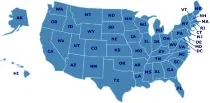
Local & State Resources
local and state resources…
What's Popular
Product Reviews on Homeschool Blogs: How to Get Them
How to get bloggers interested in your products so that they will write product reviews on their homeschool blogs -- have an outstanding product first of all and give bloggers incentives. Find social media savvy homeschool bloggers on Twitter and G+ using two special hashtags.
Homeschooling in the United States: 1999
This report, Homeschooling in the United States: 1999, presents an estimate of the number of homeschooled students, characteristics of homeschooled children and their families, parents' reasons for homeschooling, and public school support for homeschoolers. Major findings from the Parent-NHES:1999 indicate that in the spring of 1999, an estimated 850,000 students nationwide were being homeschooled. This amounts to 1.7 percent of U.S. students, ages 5 to 17, with a grade equivalent of kindergarten through grade 12. Four out of five homeschoolers were homeschooled only (82 percent) and one out of five homeschoolers were enrolled in public or private schools part time (18 percent). It also found that a greater percentage of homeschoolers compared to nonhomeschoolers were white, non-Hispanic in 1999—75 percent compared to 65 percent. At the same time, a smaller percentage of homeschoolers were black, non-Hispanic students and a smaller percentage were Hispanic students. Further, it was found that the household income of homeschoolers in 1999 was no different than nonhomeschoolers. However, parents of homeschoolers had higher levels of educational attainment than did parents of nonhomeschoolers.
Homeschooling: A Growing Option in American Education
Various factors drive families to opt for homeschooling, including concerns about school environments, dissatisfaction with academic instruction, and a preference for religious and moral guidance absent in traditional schools. The decentralized nature of homeschooling presents challenges for researchers trying to determine its specific impact on outcomes like academic achievement. Despite these challenges, evaluations consistently point to the positive academic performance of homeschooled students.
A Beka Academy
A Beka Academy is an accredited, comprehensive distance-learning program for kindergarten through grade 12. This academically challenging, college preparatory education features high-quality video instruction and uses Christian character-building textbooks from A Beka Book.
Parents' Literacy and Their Children's Success in School: Recent Research, Promising Practices
This report examines recent research and program developments designed to improve the education of children by improving the literacy skills of their parents (particularly their mothers) who did not graduate from high school.
Home School Curriculum Choices
Flexibility is the key for this homeschooling mother. Alternating textbooks with other materials allows one to tailor the school schedule to life's little realities.
Reaching the Homeschool Market
A look at what homeschoolers buy and different ways to reach the homeschool market.
Language Arts and Unschooling
A former high school English teacher shares some of the ways that reading, writing, and grammar are learned naturally through living.
The Curriculum Hunt
Is it better to be able to get down to business and wade through the thousands of curricula choices available today or would it still be a good idea to develop a philosophy of education first? A look at how to organize your hunt for the best curricula for your family.